When a Moroccan person offers you tea, don’t say no. This is not just a drink. It’s their way of saying: you are welcome here, sit down, let’s talk.
The tea is always poured from high above the glass. This makes foam on top. Foam means the tea was made with care. The higher the pour, the more welcome you are.
There are always three glasses. An old Berber saying explains why: the first glass is gentle like life, the second is strong like love, and the third is bitter like death. Each glass tastes different because the tea gets stronger as it sits.
If someone offers you tea in Morocco, sit down and accept it. Twenty minutes with a cup of Moroccan tea will teach you more about this country than any travel guide.
The Sahara Is different from what you imagine
Most people expect to see only big golden sand dunes. The dunes are real and they are beautiful. But most of the Sahara is flat, rocky ground, dark and quiet, almost like another planet. The famous dunes near Merzouga are actually a small part of it.
The thing that surprises people most is the silence.
I grew up near the desert in Boumalne Dades. I still find it hard to explain that silence. In a city, silence just means no noise. In the Sahara, silence feels heavy. You notice your own breathing. You hear thoughts that you normally can’t hear because daily life is too noisy.
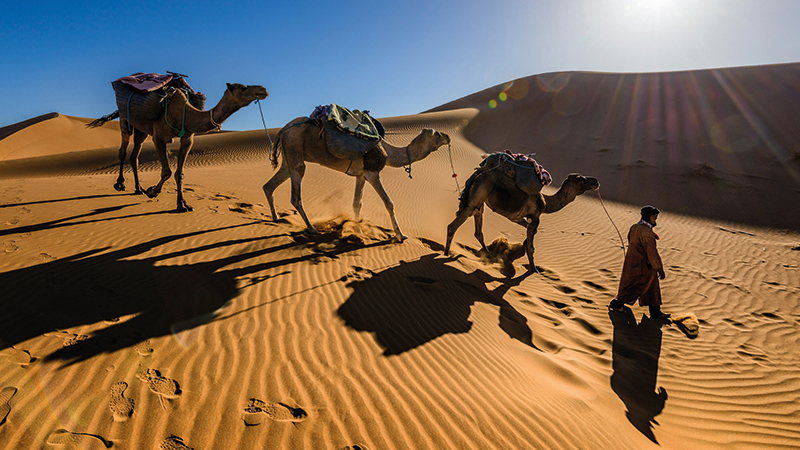
People arrive to see a beautiful landscape. They leave feeling something they didn’t expect and can’t easily explain to friends back home. I have seen this happen many times. A traveler sitting alone on top of a sand dune at sunset, not taking photos, just sitting quietly. That is what the Sahara does to people.
The best time in the desert is not the middle of the day. It’s the hour before sunrise and the hour after sunset. The colors in the sky during those moments are unlike anything you will see anywhere else in the world. Set your alarm. It is always worth it.
Most travelers who have this experience arrive as part of a guided Morocco desert tour. Not because they can’t find the dunes alone, but because having a local guide means you sleep in the right place, wake up at the right time, and you don’t need to check your phone to figure out where to go. You are just there, completely present.
Why Moroccans Open Their Doors to Strangers
This surprises almost every visitor. You are walking through a small village in the Atlas Mountains and someone you have never met invites you inside for tea and food. No reason, just a warm welcome.
This tradition comes from Morocco’s history. For hundreds of years, travelers crossed Morocco on long trade routes between Africa and the Mediterranean. Those travelers needed food, water, and shelter. Refusing to help someone on a journey was seen as a moral failure here. That idea became part of the culture and part of the religion.
In Arabic, there is a word you hear everywhere in Morocco: MARHABA. It means welcome. But the original meaning of the word is open space, room to breathe. When a Moroccan says Marhaba, they are telling you there is space for you here.
In Berber culture, a guest is not a burden. A guest is a gift. Someone who arrives at your door chose you, and that is something special.
When you understand this, Morocco changes. It stops being a country you visit and becomes a place that welcomes you.
Bargaining in Markets: You Have It Wrong
Most travel guides warn tourists about bargaining in Moroccan markets like it’s something dangerous. That is the wrong way to think about it.
Bargaining is not a trick. It is a social tradition. When a seller gives you a price and you say it’s too much, you have not offended anyone. You have started a conversation. He will ask where you are from. You will talk. He will make tea. By the time you agree on a price for that bag or carpet, you will probably know the names of his children.
In Europe and America, fixed prices in shops are actually the unusual thing if you think about history. For most of human history, people looked each other in the eye and agreed on a price together. The markets in Morocco still work this way and there is something very human about it.
One simple rule: never say a price you are not ready to pay. If the seller says yes to your offer, you buy. That is the only thing that truly causes offense.
If you feel lost and a little overwhelmed walking through the souks of Marrakech or Fes, that is completely normal. The old medinas were built to be complicated, to make you slow down and look around. Getting lost is not a problem. It is actually the experience.
The Morocco Most Tourists Never See
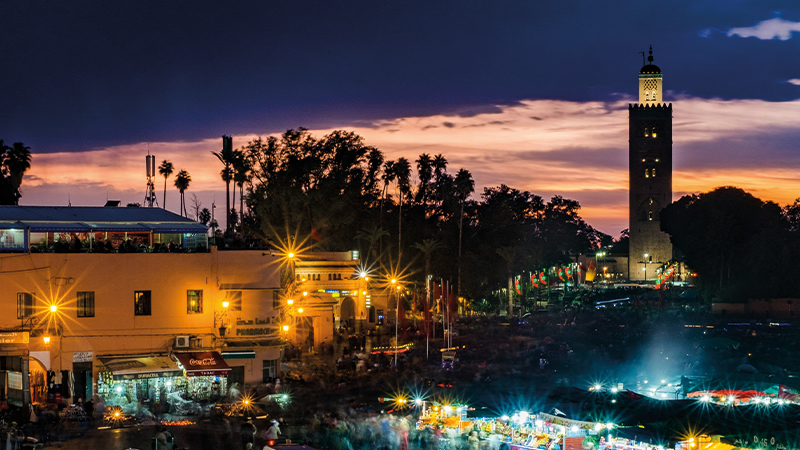
Everyone comes back with the same photos. Blue streets in Chefchaouen. The big square in Marrakech at night. Sand dunes at sunset. These are beautiful places and beautiful photos. But there is another Morocco that very few visitors see.
- The road between Tinghir and Merzouga at six in the morning, when the desert looks like it is made of copper.
- The weekly market in a small southern town where farmers from twenty different villages come with donkeys, carpets, and fresh vegetables, and everything feels like it belongs to another century.
- A Berber family that invites you for dinner because they want to know where you are from and what you think of Morocco, and they are genuinely waiting for your answer.
These moments don’t happen on a planned schedule. They happen when you travel slowly, with someone who knows where to look. At this is what I do with my guests in Numidian Morocco Tours.
That is actually what makes a good guided desert tour in Morocco different from a bad one. Not the price. Not the itinerary. Whether the person with you knows when to slow down.
What the Atlas Mountains Will Surprise You With
The Atlas Mountains are one of the most dramatic landscapes in all of Africa. Most travelers see them through a bus window on the way to the desert and never stop. That is a real shame.
The mountain roads over the Tizi n’Tichka pass reach more than 2,000 meters high. The villages on those slopes are home to Amazigh Berber communities who have lived there for centuries. Some of the older women in those villages have traditional tattoos on their faces, geometric patterns that were common across North Africa for generations but are now slowly disappearing. If you see one of those women and she lets you take her photo, you are holding something rare in your camera.
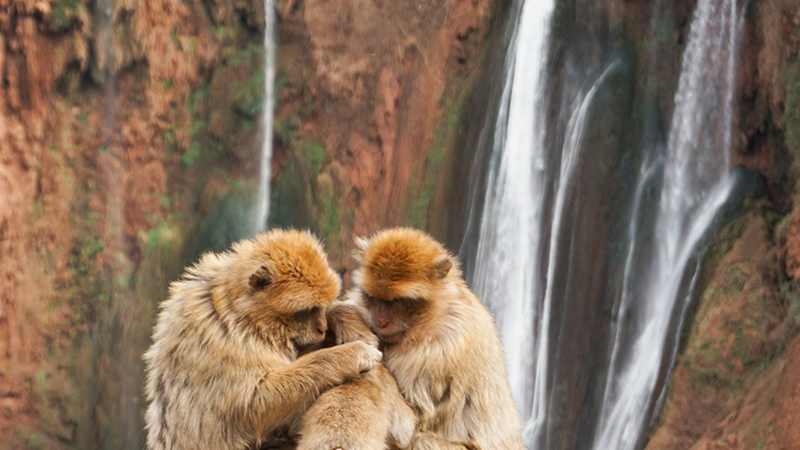
The mountains also change how people think about Morocco. This is not only a hot desert country. This is a country where it snows.
Where there are forests of cedar trees with wild monkeys jumping between the branches. Where shepherds move their animals up the mountain every summer and back down every winter, exactly as their grandparents did.
That is what makes Morocco so interesting to explore without rushing.
One Last Thing Before You Pack
People always ask me what to bring to Morocco. Good walking shoes, yes. A light scarf, definitely. But the most useful thing you can bring is patience and curiosity at the same time.
Morocco will not always go as planned. A bus might be late. A restaurant might be closed. A road might be blocked. But every single time something like that happens, something else appears instead. Something you were not looking for. Something better.
This is the country I grew up in. And after many years of showing it to travelers from all over the world, it still surprises me.
If you want to see Morocco the way I see it, take a look at our guided Morocco desert tours at Numidian Morocco Tours and let’s plan something together.